
Uniforms are an investment. But the hidden costs often come from how they are managed.
For organisations with large or distributed workforces, managing uniforms means much more than ordering garments. Stock levels, sizing, employee requests, replacements, deliveries, returns and forecasting all create operational complexity.
Without visibility, that complexity can quickly translate into unnecessary cost.
The cost of not knowing
How much stock do you really need? Which sizes are being used? When will you need to reorder? Where are costs increasing?
When this information is spread across spreadsheets, emails or disconnected processes, it becomes harder to make informed decisions.
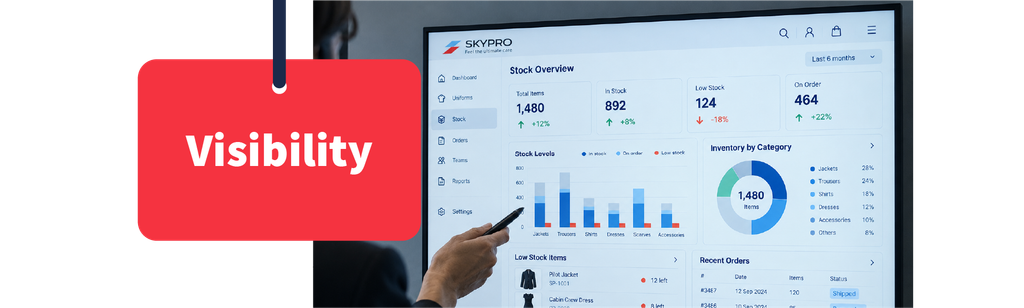
The result can be over-ordering, excess inventory, urgent purchases and time spent solving problems that could have been anticipated.
A digital Uniform Management System brings these moving parts together.
From data to better decisions
mySKYPRO gives companies greater visibility over their Uniform Program, connecting ordering, real-time stock monitoring, reporting and demand planning within one digital ecosystem.
AI-powered consumption forecasting can help anticipate future requirements and optimize inventory based on actual demand.
The business impact can be significant: mySKYPRO can reduce uniform inventory costs by up to 40%.
But smarter management isn’t only about reducing stock.
It’s about understanding what is happening across the entire Uniform Program and using that information to make better decisions.
Less waste. More control.
Ordering closer to actual demand can also reduce unnecessary production and unused stock.
At the same time, employees have a simpler way to manage their uniform needs, while Uniform Managers gain greater control over inventory, costs and operations.
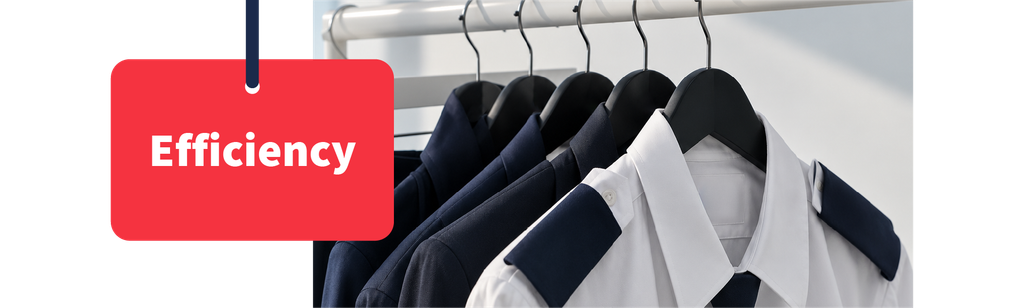
That means fewer disconnected processes, less manual work and greater visibility across the program.
For complex operations across airlines, cruise lines, railway and logistics, that visibility can make a real difference.
Make the hidden ROI visible
The cost of a uniform is easy to see.
The cost of inefficient Uniform Management is often harder to identify.
Digitalisation changes that.
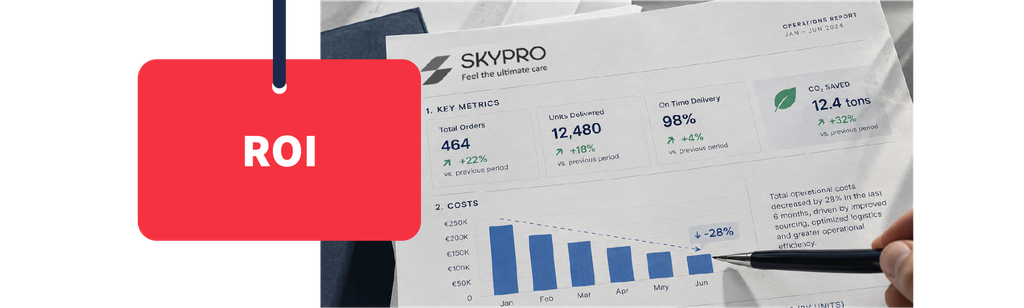
By connecting data, inventory, forecasting and employee needs, companies can move from reacting to uniform demand to managing it proactively.
Less over-ordering. Less waste. Less manual work. More visibility. More control.
Because the smartest savings aren’t always about paying less for a uniform.
Sometimes, they’re about managing the entire Uniform Program better.
